Unit 1
Part 1
My site is a rubbish bin outside my apartment building. I chose it because it seems like a very ordinary and clearly defined object, but when I started observing the space around it, I found that many different behaviours were actually connected to it.
-
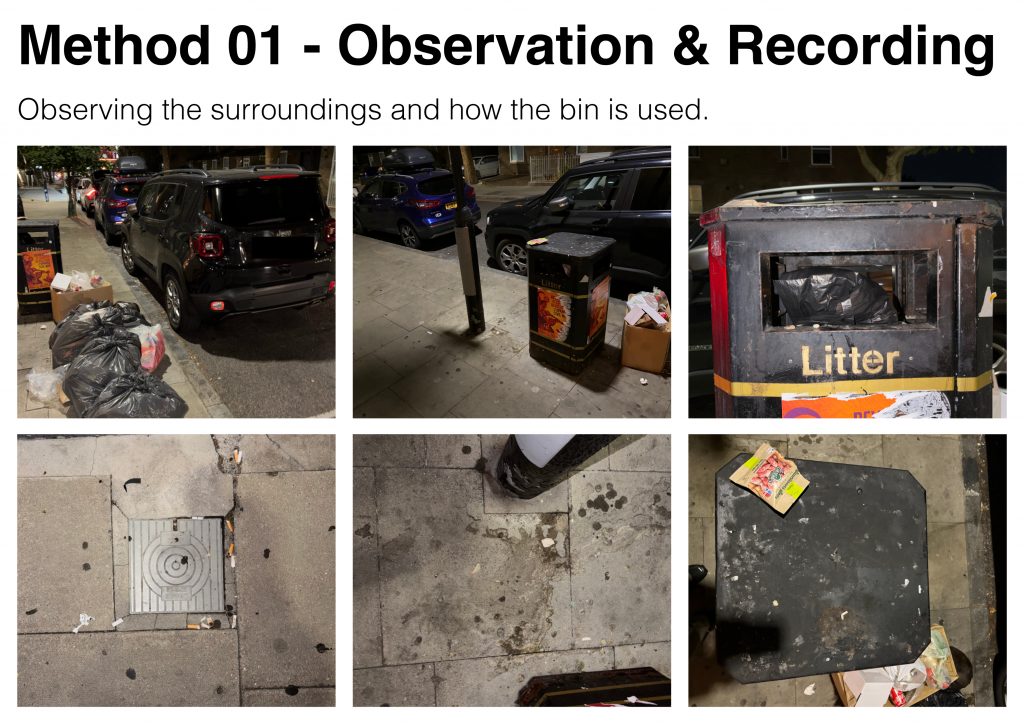
My first method was observation and recording. I took some photographs of the bin and its surrounding space, and recorded things I noticed, such as rubbish on the ground, cigarette butts, and some dried liquid stains. I wanted to understand the environment around the bin and how it was actually being used.
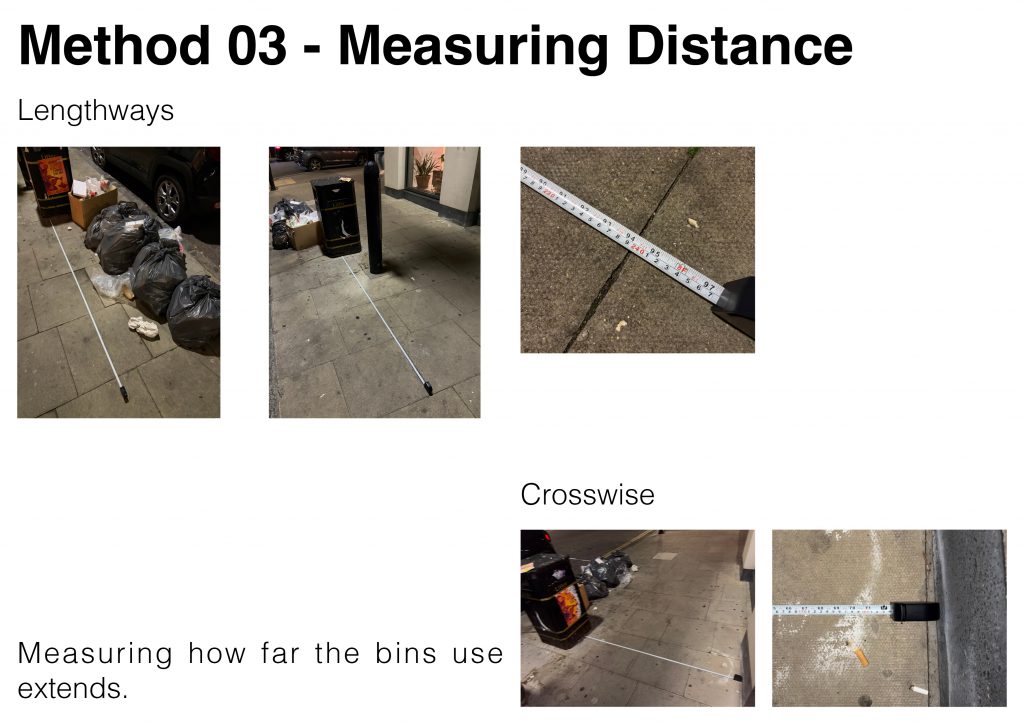
My second method was measuring distance. I measured the distance between some of the waste and the bin, to explore how far the bin’s use extends into the surrounding space.
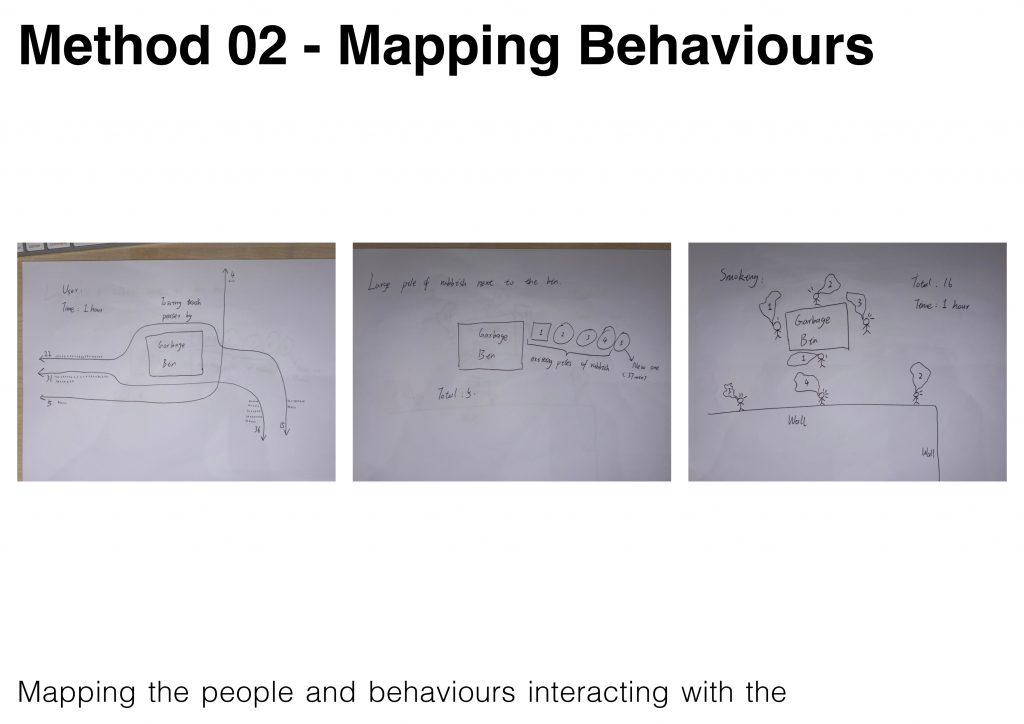
My third method was mapping behaviours. I observed the site for about an hour and recorded several types of people and behaviours interacting with the bin, including passers-by, people putting small rubbish in the bin, people leaving large rubbish next to it, and smokers. I mapped their positions, directions and numbers.
Findings
Through these three methods, I found that the boundary of the bin’s use expands in response to surrounding behaviours. It is no longer just the bin itself, but starts to involve and connect with the space around it.
Reflection
My reflection is that an object’s function is not entirely determined by its design; it is also redefined through actual use. This research made me think about whether the functional boundary of an object is really defined by its design, or by the people who use it.
So, what I’m really interested in is not just the rubbish bin, but the gap between an object’s designed function and how it is actually used in a real environment.
Part 2
Lytton: Traces on the GroundOrganising the Site Photos
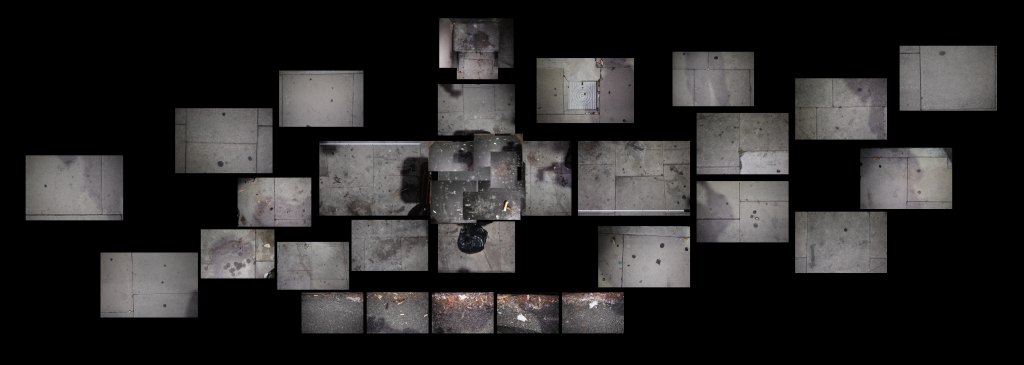
I took photos of the ground around Lytton and put them together, roughly arranging them according to where they were taken. This helped me build up a picture of the area. At this stage, I mainly wanted to record what was already there and look at the different things on the ground around Lytton and the nearby roads.
Adjusting the Area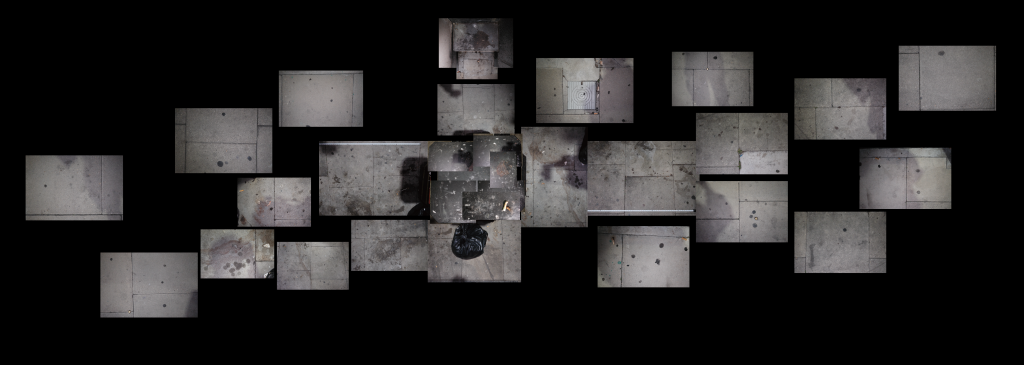
While arranging the photos, I noticed that there was an area along the edge of the road where I couldn’t find any chewing gum. There were only other bits of rubbish and marks on the ground. So, in the next image, I removed this area and focused on the parts where the gum appeared. This also made me think about what to keep and what to leave out when recording a site.
Marking the Chewing Gum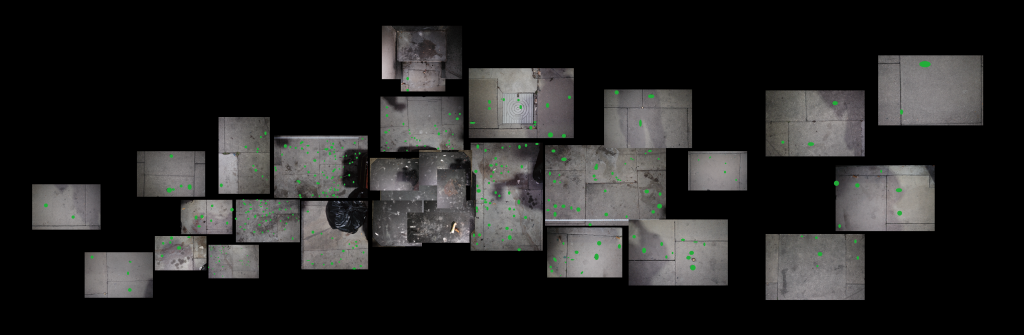
I chose chewing gum as the main marker for this study and marked each piece I could see in the photos. I made small changes to the dots to show the different shapes of the gum. This turned the gum in the photos into a set of marks that were easier to look at and compare.
Looking at the Distribution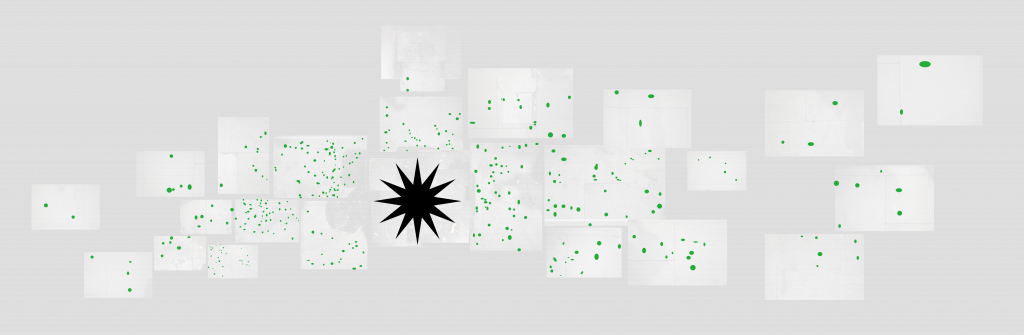
Next, I made the ground photos more transparent so the gum marks would stand out. I also marked the location of Lytton. This made the pattern easier to see. The gum was more concentrated around Lytton and gradually became less common further along the road. The overall shape looked a bit like a star spreading out from a centre.
Counting the Gum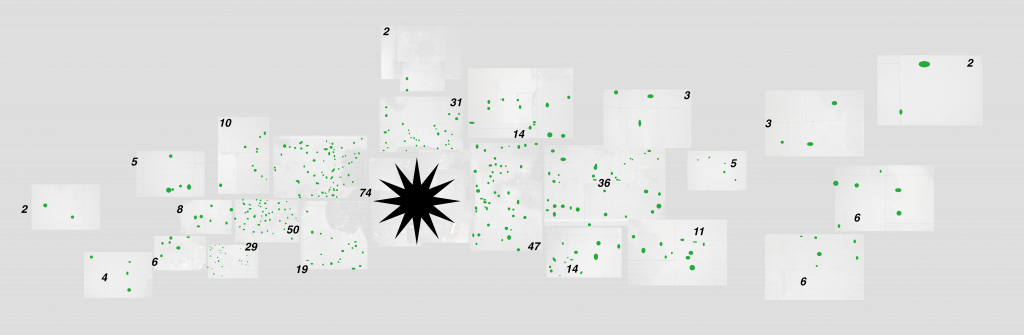
In this image, I added the number of pieces of gum found in each photo area. This means the image shows not only where the gum is, but also how much there is in different areas. The numbers help me compare the areas more clearly, instead of relying only on what I can see.
Removing the Ground Background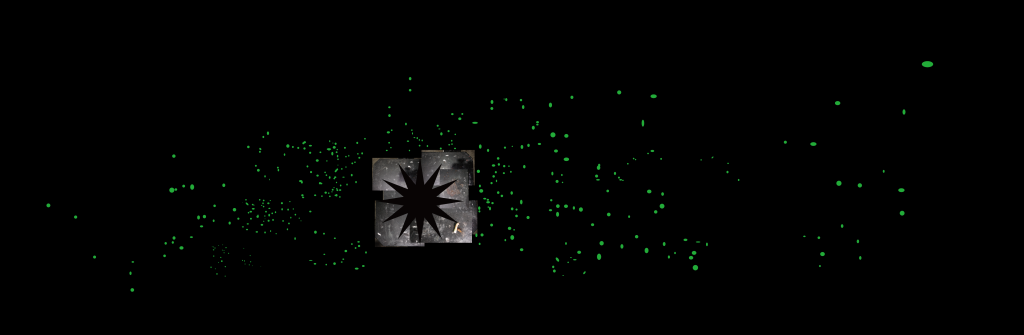
Next, I removed the ground photos and changed the background to black. I kept the photo of the bin and the gum marks around it. This made the other details less distracting and helped the gum stand out. The bright dots against the black background reminded me of satellite images of city lights at night.
Lytton and the Traces Around It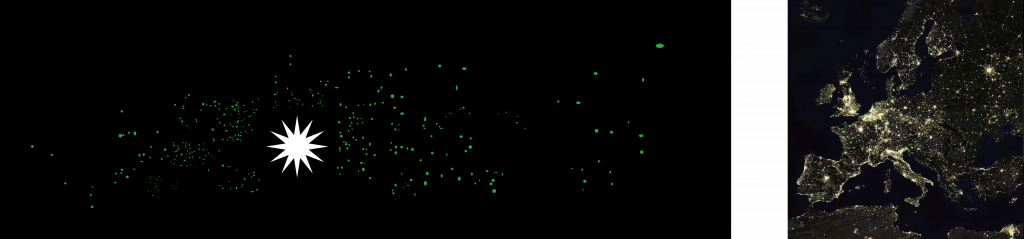
Finally, I removed the photo of Lytton itself and replaced it with a simple icon. I kept the gum marks around it and placed the image next to a satellite image of city lights at night. Although the two images show different things, they both use dots to show patterns across a space. One shows lights across a city, while the other shows pieces of gum left on the ground.
ReflectionThis project made me start noticing marks on the ground that I would normally ignore. Chewing gum is very small, but when I recorded each piece and put them all together, I noticed that they were not spread out evenly. There was more gum around Lytton, and the amount gradually decreased further away.
This made me wonder if these marks were connected to the way people use the space. The location of the gum might be related to where people walk, where they stop, or how they use the area. However, I can’t say for sure what causes this pattern, and I can’t say that more gum means Lytton has a stronger influence.
It also reminded me of my first stage of research. At that time, I was looking at the function of Lytton and how it affects the surrounding environment. This time, I started from the marks on the ground to see whether people’s activities leave traces outside the building. To me, chewing gum is not just rubbish anymore. It can also be a record of what has happened in a place.
Next, I want to look more closely at why the gum appears more often in some areas than others. Is there a connection between these marks, the function of Lytton, the surrounding space, and people’s everyday behaviour? I don’t have a clear answer yet, but this pattern gives me a starting point for further research.
Part 3
Looking Closer at Chewing Gum
Original Photos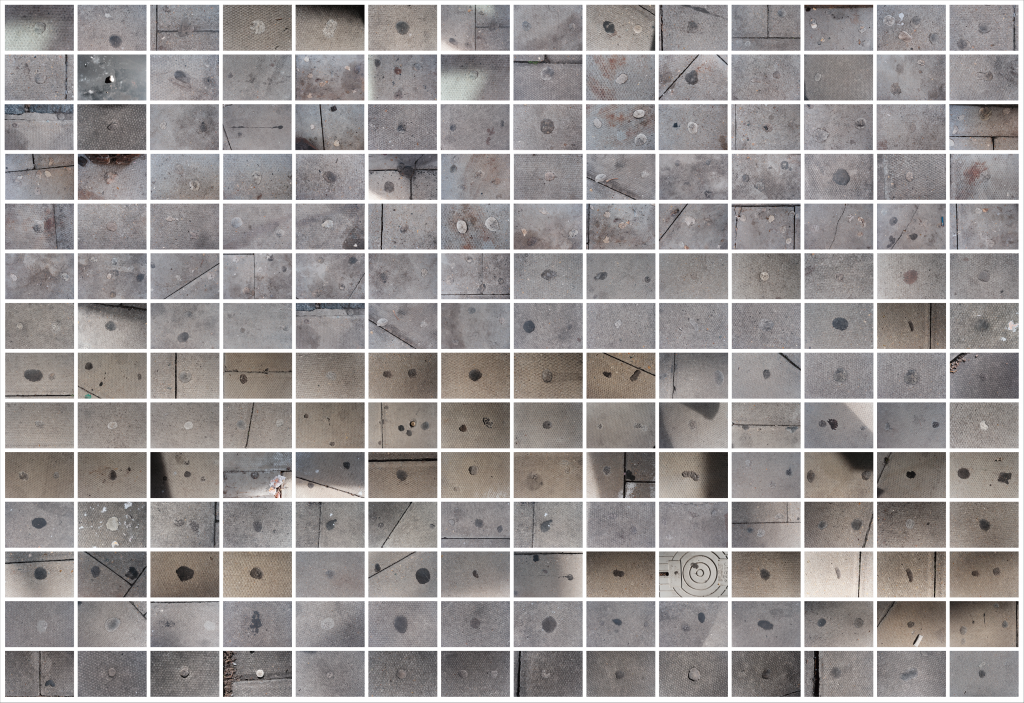
This time, I took nearly 200 close-up photos of chewing gum. I organised 196 photos into a 14-by-14 grid. I kept the original colours and details of the ground, and each photo shows different amounts and shapes of gum.
While looking through the photos, I noticed some changes in colour. The gum near Lytton was mostly quite light, while some of the gum in areas where people often walk was much darker, almost black. I thought this might be because people keep stepping on it.
Black and White Photos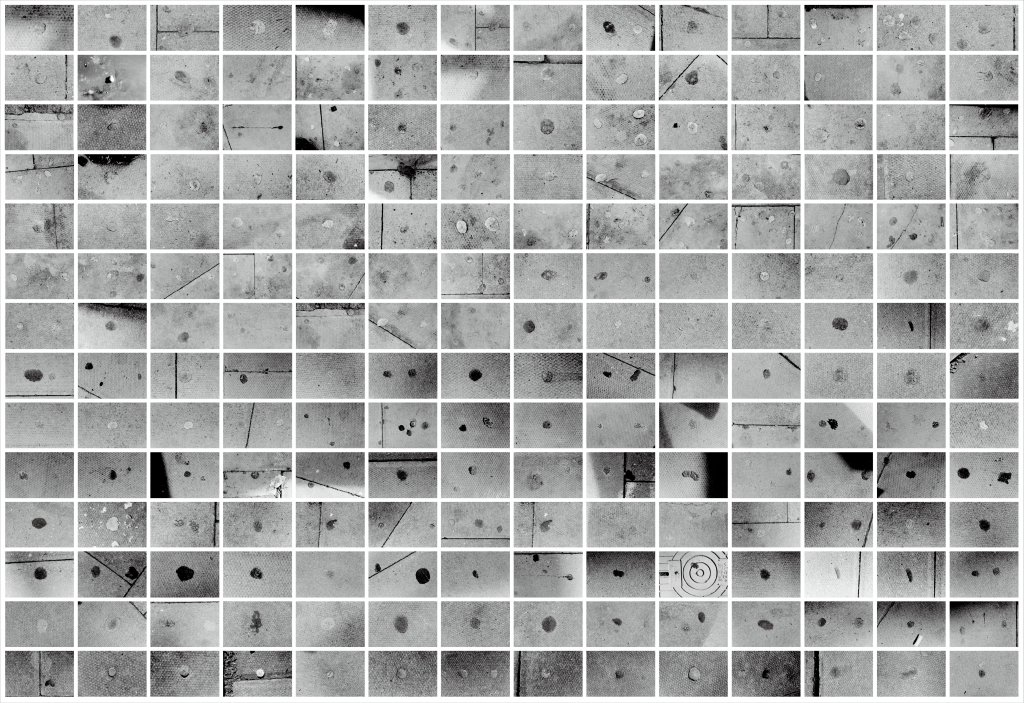
For this image, I changed all the photos to black and white. I wanted to reduce the effect of the original colours and make the contrast between the gum and the ground clearer.
Without the colours, the shapes look a little different. Some edges that were harder to notice in the original photos also become easier to see.
Simplifying the Shapes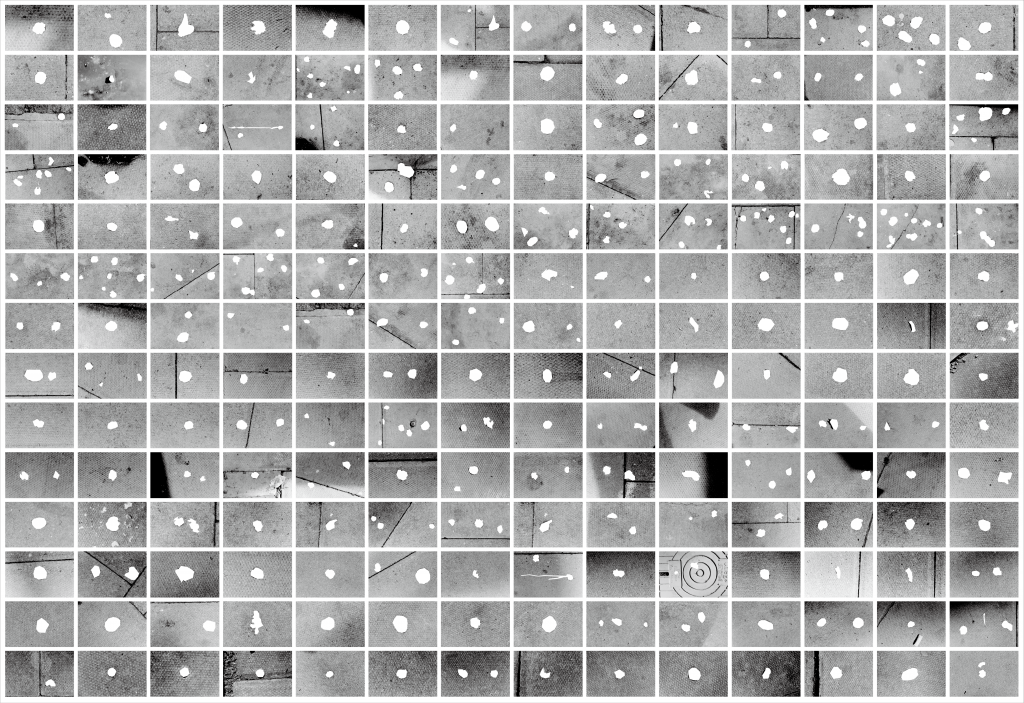
Next, I redrew the outlines using simpler, straighter lines. I removed some of the smaller details and kept the basic shapes.
After this change, the gum started to look different from how it appeared in the photos. It became more like a collection of graphic shapes rather than real objects. This also made it easier to compare their differences.
A Catalogue of Gum Shapes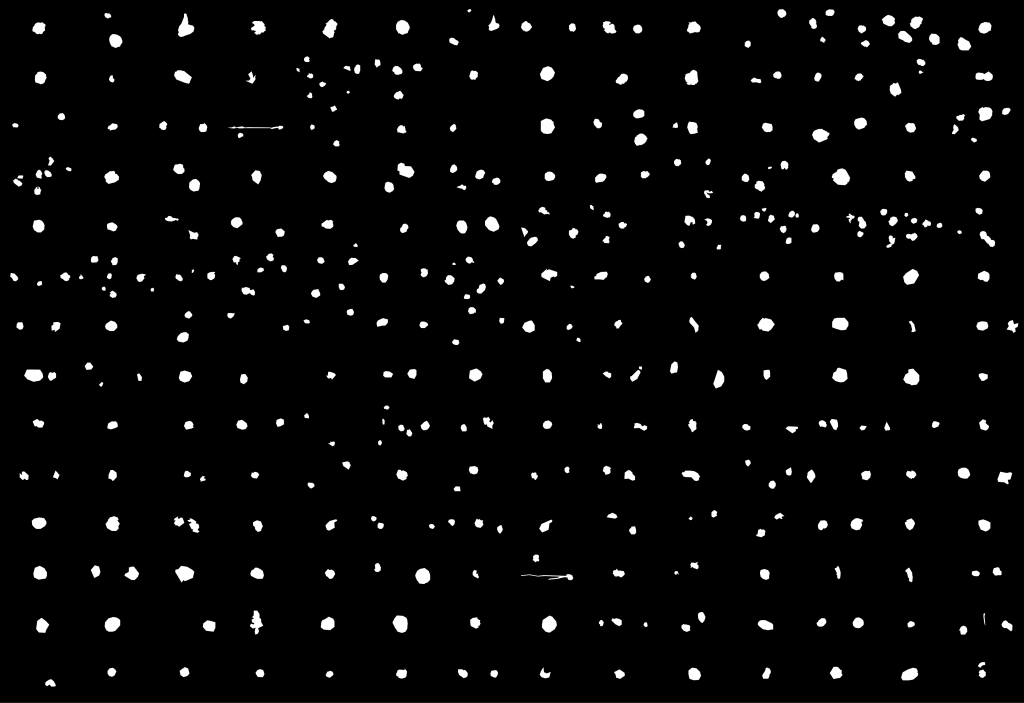
In this image, I took the gum shapes out of the original photos and placed them in white on a black background. It looks a bit like a catalogue of gum shapes.
Each piece is shown separately, without the colours and textures of the ground. Putting them together makes it easier to compare their different shapes and sizes, and to see how irregular they are.
Adding Gradients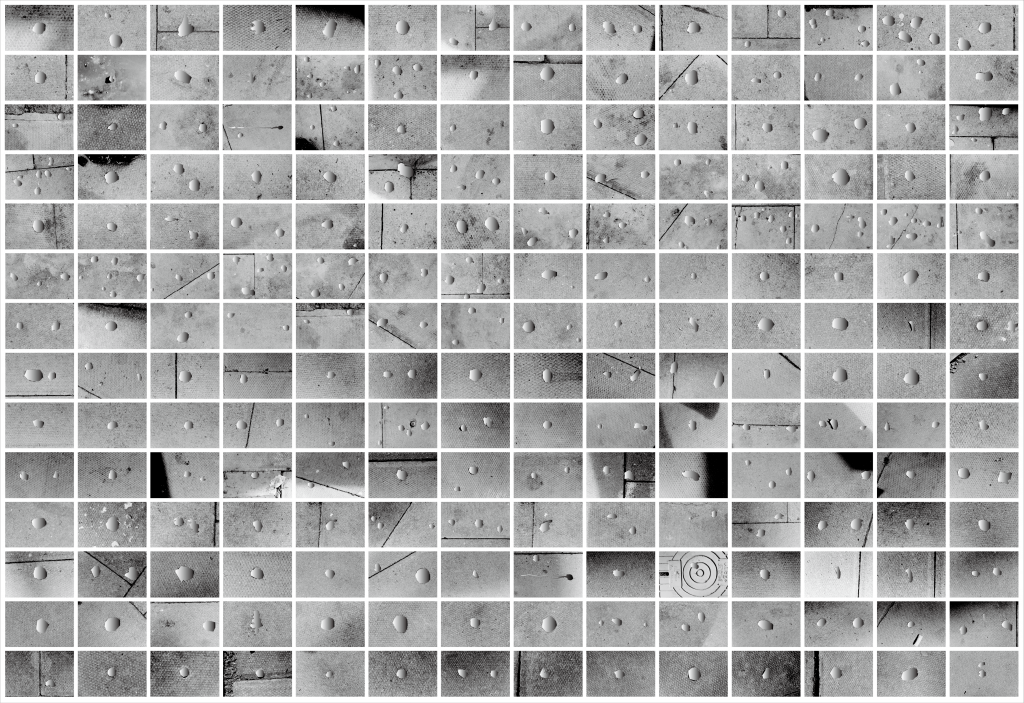
For this image, I added gradients to the simplified gum shapes and placed them on a black-and-white background. The gradients make the flat shapes look thicker and more three-dimensional. Some of them almost look like they are sticking out of the ground.
The gum is no longer just a flat outline. It starts to look more like a physical material.
Returning to the Original Ground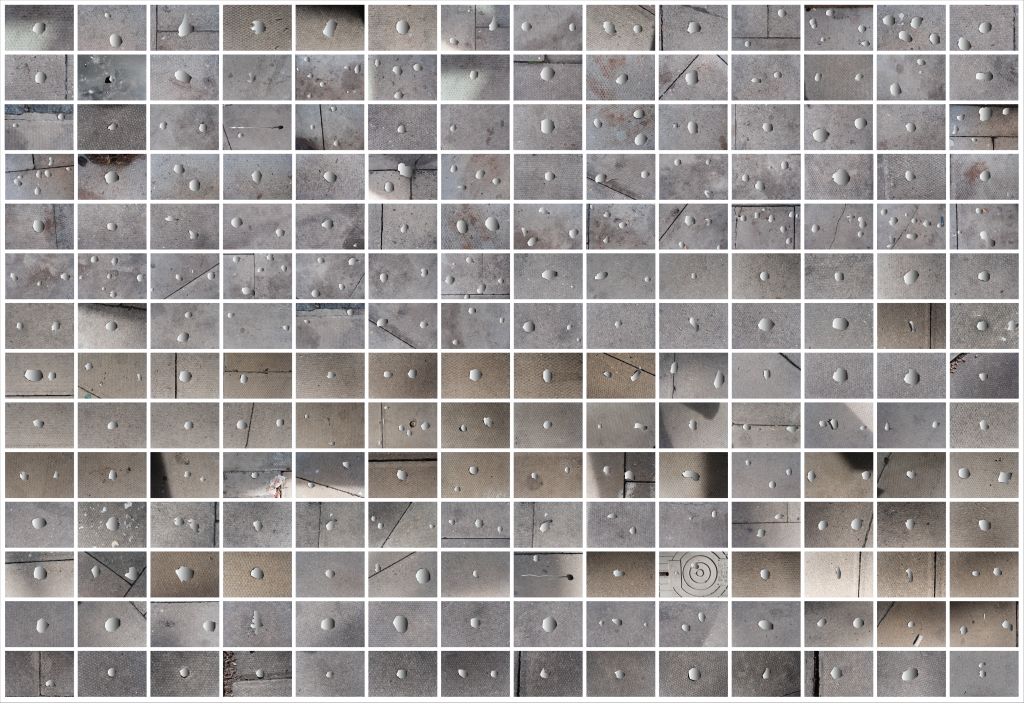
For the last image, I brought back the original colour photos of the ground and kept the edited gum shapes and gradients.
This brings the shapes back into their original environment. I can see both the edited forms and how they relate to the colours and textures of the ground.
ReflectionThrough this experiment, I started to focus less on where the gum was and more on the gum itself. In my previous work, I mainly looked at where it appeared and how it was distributed around Lytton. This time, I took close-up photos to look at its colours, shapes and condition on the ground.
I noticed that even though all the objects were chewing gum, they looked quite different. Some were light in colour, while others were much darker. Some still had clear shapes, while others looked flat and irregular. I thought these differences might be related to how long the gum had been on the ground and how often people had stepped on it. However, I can’t tell for sure just from these photos.
I also tried different ways of showing the gum. I started with the original photos, then changed them to black and white, took out the shapes, simplified the outlines and added gradients. Each version made me look at the gum in a different way. Without the ground in the background, the gum looked more like separate shapes. When I placed it back into the original photos, it became connected to the surrounding environment again.
This made me think about how chewing gum is rubbish, but it can also stay on the ground for a long time and change over time. Its shape and colour might show some of what has happened to it. I started to see it as a trace left on the ground, rather than just something that needs to be cleaned up.
Connecting this to my previous research, I want to keep exploring how these traces might relate to people’s everyday activities and the space around Lytton. I don’t have a clear answer yet, but by looking more closely at these small details, I hope to find more things worth investigating.
WRITTEN RESPONSEI started by taking photographs of the ground around Lytton. I wanted to see if the function of the building had any effect on the space around it. When I looked through the photographs, I noticed a lot of chewing gum on the ground. I decided to mark its position because, unlike cigarette butts or water stains, it seemed less likely to disappear. After marking the gum on my photographs, I noticed that there were more marks around Lytton, and fewer further along the road.
This reminded me of Georges Perec’s‘The Street’ (Perec, 1997). His writing made me think about how much there is to notice in an ordinary place. I had photographed the ground around Lytton, but I had not originally gone there to look for chewing gum. It only became important when I started noticing it in my photographs. This made me think about what I had left out by choosing to focus on one thing. My map shows where I found the gum, but it cannot explain why it was there.
I also thought about Agnès Varda’s film The Gleaners and I (2000). Varda pays attention to things that people leave behind or reject, including potatoes with unusual shapes. These things might normally be ignored, but the film makes us look at them again. My project is different because I am mainly looking at the gum’s locations rather than the people and circumstances behind it. Still, I started to see the gum differently. It was no longer just rubbish on the pavement, but something I wanted to collect and understand.
I photographed 196 pieces of gum individually and arranged them in a grid. I tried different colours, outlines and gradients, but I kept returning to the map with the dots on a black background. Once I removed the ground photographs, the dots reminded me of a city at night, seen from above. I found this interesting because I had not changed the positions of the gum, only the way I presented them. The grid showed the pieces individually, while the map made me focus on their distribution. I began to wonder whether I was finding a pattern in the place or creating one through the way I showed it.
I still do not know if the distribution has anything to do with Lytton’s function. But the project has made me think about how what I choose to record affects what I see, and how the same material can suggest different things when presented in different ways.
References
Perec, G. (1997) ‘The Street’, in Species of Spaces and Other Pieces. Translated by John Sturrock. London: Penguin, pp. 46–56.
Varda, A. (2000) The Gleaners and I [Film]. France: Ciné Tamaris.
Leave a Reply